How funerals help you accept death emotionally, not just intellectually
Working with bereaved families has taught me that one of grief’s most difficult aspects is the disconnect between the intellectual understanding of your loved one’s death and the emotional acceptance of it. You know they’ve died—the hospital confirmed it, the death certificate proves it, the silence in your house acknowledges it. Yet some part of you keeps expecting them to walk through the door.
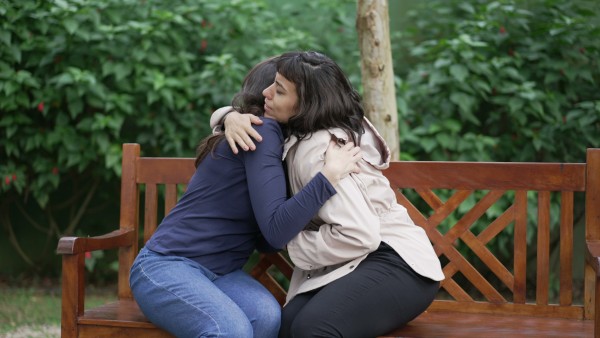
A funeral service bridges this gap. Seeing the casket, hearing others speak in the past tense, participating in rituals of farewell—these concrete experiences help your heart begin accepting what your mind already knows.
This is what funerals do. They create the space for grief to begin its work.
Three weeks after David’s sudden death, his daughter Emma sat in my office looking tired and upset. "I keep thinking I’ll see him in his workshop," she said quietly. “I know he’s gone, but it doesn’t feel real yet.” We’d held his funeral ten days earlier—a simple service with his carpentry tools displayed and his favourite country music playing
“I didn’t want to do it,” she admitted. “Dad always said he didn’t want a fuss. But when I saw how many people came, and when I heard stories about some of the funny habits he had, how he used to sing for workmates’ birthdays, or the jobs he’d done for people who couldn’t afford to pay. That’s when my own memories came flooding in and I started to say my own goodbyes.”
The stories that matter
Funerals change the experience of individual grief into a shared remembrance. It’s during this gathering that you often discover who your loved one was beyond your relationship with them. The colleague who reveals their mentorship, the neighbour who describes their quiet kindnesses, the friend who shares the humour you thought only your family knew—these testimonies create a fuller picture of the life that’s ended.
When Tony’s father died, one of his former pupils stood and recounted how his father had changed his life by giving him confidence in himself and his own abilities. “If it hadn’t been for him, I would never have gone to university, I wouldn’t be the person I am today,’ he said, movingly.
“I knew Dad was important to me,” Tony said afterwards, “but I didn’t realise how many other lives he’d touched.”
Eulogies provide public testimony that this life mattered, offering proof of impact that grieving families desperately need.
The questions that have no answers
In the days after someone dies, the big questions arrive uninvited. Did they have a good life? What is life, anyway? Why do we die? These aren’t questions with simple answers, and grief doesn’t demand that we find them immediately.
The funeral gives us a time and a place to hold these questions in our hearts. Standing amongst others who are also wondering, also searching, we begin to find our way towards answers that give us peace. Not complete answers, perhaps, but enough to carry us forward.
I’ve noticed that some people find comfort in religious explanations, others in the continuation of love beyond death, and others in the simple fact that their person existed and mattered. The funeral doesn’t provide the answers, but it can create the space where we begin looking for them.
The comfort of gathering
Grief can feel profoundly isolating. The funeral creates a special moment when everyone who cared about the deceased comes together in shared loss. There’s something powerful about being in a room full of people who understand, who are also struggling with absence, who can sit beside you whilst you cry without needing to fix anything.
The simple acts matter—the hugs, the shared tears, the moments when someone catches your eye and you both understand what cannot be said.
Moving grief outward
I always tell people that there’s an important difference between grief and mourning. Grief is what we feel inside—the sadness, the anger, the confusion, the love. When we grieve but don’t mourn, these emotions can feel unbearable. They fester inside us, growing heavier with time.
Mourning is grief expressed outward. It’s crying at the funeral, sharing stories, lighting a candle, playing their favourite song. Mourning helps us heal in ways that grief alone cannot.
The funeral is an essential rite of initiation for mourning. It gives you permission to express emotion. When the celebrant’s voice breaks, when someone sharing memories pauses to compose themselves, they model that it’s acceptable to feel the full weight of loss. The funeral helps us get off to a good start and sets our mourning in motion.
The framework grief needs
Music, readings, cultural rituals, and religious practices—these elements provide structure when emotions feel chaotic. They offer something to hold onto when words fail.
I worked with a family recently who chose their mother’s favourite hymn for the service. They’d been managing fairly well until the music started, and then everyone broke down together. “We needed that,” her son told me later. “We’d been so busy with arrangements that we hadn’t really cried yet. The music gave us permission.”
Whether through old traditions or contemporary innovations, these rituals create a pathway offering moments that connect mourners to something larger than individual loss.
A new threshold
Often unacknowledged, but something I’ve found to be really vital, is the ‘rite of passage’ that a funeral plays when you lose your husband, wife or life partner.
You’re in a kind of ‘threshold space’—no longer married or part of a couple, but not yet a widow or widower. The funeral helps navigate this transformation through three phases: the initial separation, ‘liminality’ (an anthropological term for being between identities), and the reintegration into a new phase of life as a widow or widower.
The bereaved wife or husband’s special position during the service—seated at the front, receiving condolences and being the focus of communal support, acknowledges this transitional state, even though people often don’t realise the role these traditions play.
Waking up to what matters
Funerals don’t complete the grieving process—Emma was right that the pain remained sharp long after David’s service ended. But they mark grief’s formal beginning, creating a clear moment when life divides into before and after.
They also have a way of getting us to think about what really matters. Standing at a funeral, we think about what we truly care about and how we want to spend our precious remaining days. Death reminds us of life’s preciousness in a way that nothing else can.
I’ve seen this happen again and again. People leave funerals and make the phone call they’ve been putting off. They forgive old grievances. They stop postponing the things that matter. Funerals help us embrace the wonder of life and death, not as opposites but as inseparable parts of the same experience.
At its heart, a funeral is an act of love—a way of saying ’you mattered, you changed us, and you always will.’
It’s the community bearing witness to loss and affirming that this life deserved to be honoured. The gathering may last only an hour or two, but the memories created become part of how families carry their loved ones forward.
Your grief deserves this recognition, and your loved one deserves this final gathering. Not because tradition demands it, but because saying goodbye properly matters—for everyone left behind.
Sam - representing the Funeral Directors Association of New Zealand (FDANZ).