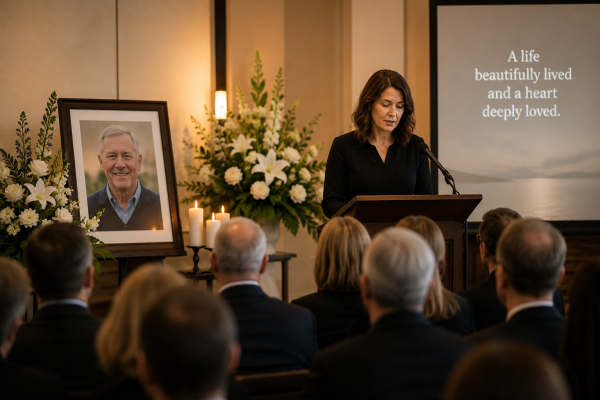
Why have a funeral
We have funerals for many essential reasons. In addition to offering a way to respectfully commit the body of someone we love to the ground or to ashes, funerals have been a means of expressing our beliefs, thoughts, and feelings about life and death.
Funerals provide the opportunity to Gather, Remember & Celebrate the life we've lost. The purposes of the funeral ceremony can be summed up in the following ways:
- Reality - It’s hard to truly accept the finality of death, but the funeral helps us begin to do so. At first we accept it with our heads, and only over time do we come to accept it with our hearts.
- Recall - Funerals help us begin to convert our relationship with the person who has died from one of presence to one of memory. When we come together to share our memories, we learn things we didn't know and see how the person's life touched others.
- Support - Funerals are social gatherings that bring together people who cared about the person who died. Funerals are in remembrance of the person who died, but they are for the living. The funeral is a special time and place to support one another in grief.
- Expression - When we grieve but don’t mourn, our sadness can feel unbearable, and our many other emotions can fester inside of us. Mourning helps us heal, and the funeral is an essential rite of initiation for mourning. It helps us get off to a good start and sets our mourning in motion.
- Meaning - Did the person I love have a good life? What is life, anyway? Why do we die? There are no simple explanations, but the funeral gives us a time and a place to hold the questions in our hearts and begin to find our way to answers that give us peace.
- Transcendence - Funerals have a way of getting us to wake up—to think about what we truly care about and how we want to spend our precious remaining days. Ultimately, funerals help us embrace the wonder of life and death and remind us of the preciousness of life.
The meaningful funeral ceremony is made up of various elements. It is only through combining them – the visitation, music, readings, eulogy, symbols, actions, and the gathering – that the essential final experience is reached.
(Adapted from ‘Educating the Families You Serve about the WHY of the Funeral’ by Alan Wolfelt, PhD)
The role of music in a funeral
Music has long been an important part of funerals, helping to create a meaningful atmosphere and giving people space to reflect, remember, and express their grief.
It can evoke memories, bring comfort, and help mourners connect with their emotions when words are difficult to find. Music also brings people together, encouraging support, empathy, and shared remembrance.
The most meaningful choices are often personal. Consider the music your loved one enjoyed, songs that remind you of them, or pieces that reflect their personality, values, or your feelings about their life. Family members or friends who sing or play an instrument may also wish to contribute to the service.
Whether traditional, contemporary, spiritual, or secular, music can be a powerful and healing part of saying goodbye.
(Adapted from ‘Educating the Families You Serve about the WHY of the Funeral’ by Alan Wolfelt, PhD)

Spending time with your loved one
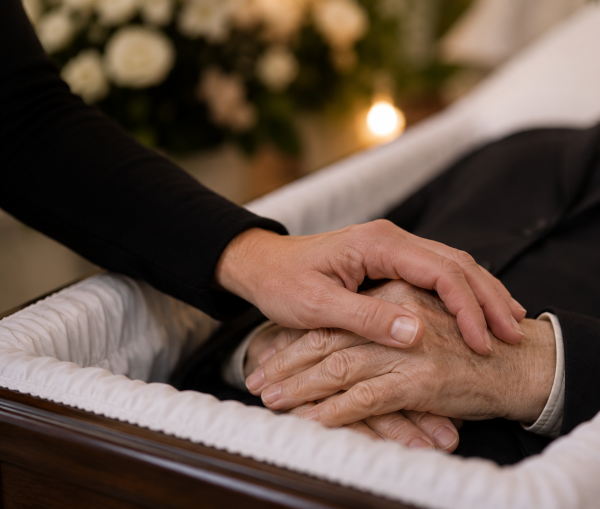
For generations, families have spent time with their loved one after death as an important part of saying goodbye. Whether through a private viewing or a more traditional vigil, being present with the person who has died can help make the reality of the loss easier to understand and accept.
While a person's body is no longer who they were, it remains a precious connection to the life they lived and the memories they leave behind. Seeing, touching, or simply spending time with your loved one can provide an opportunity for reflection, remembrance, and the expression of grief.
Many people find that spending time with their loved one before the funeral helps them begin to acknowledge the reality of the death and offers a meaningful chance to say a final goodbye.
A funeral is not about avoiding the reality of death—it is about honouring a life, acknowledging a loss, and supporting one another through the journey of grief.
(Adapted from ‘Educating the Families You Serve about the WHY of the Funeral’ by Alan Wolfelt, PhD)
Gathering after the funeral
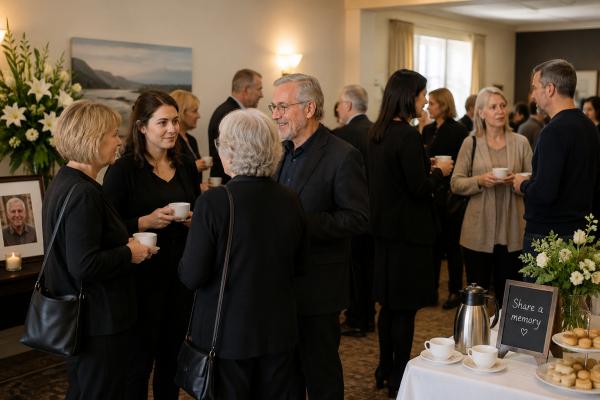
Many funerals end with family and friends coming together to share food, drink, and memories of the person who has died.
This gathering provides an important opportunity to tell stories, offer comfort, and support one another. It can also bring moments of laughter, connection, and reflection, helping mourners begin to find a sense of peace.
A gathering does not need to be formal or costly. What matters most is the chance to be together, remember the person’s life, and continue supporting one another beyond the funeral.
Sharing a life story
A eulogy is an opportunity to celebrate a person's life, reflect on the memories they created, and acknowledge the impact they had on others.
By sharing stories, achievements, values, and special moments, a eulogy helps family and friends remember, honour, and find meaning in a life well lived. It also creates a shared experience that brings mourners together and often sparks further memories and conversations.
Whether delivered by a family member, close friend, or through shared tributes from those attending, a personalised eulogy is often one of the most meaningful and memorable parts of a funeral.
(Adapted from ‘Educating the Families You Serve about the WHY of the Funeral’ by Alan Wolfelt, PhD)