What are the options?
In New Zealand there are five options available: burial, burial at sea, cremation, water cremation (aquamation) and donating a body to medical science. There is also the consideration of organ donation prior to burial or cremation.
Historically, burial has been the most common choice, and it is still favoured by many people, however nowadays there are two cremations for every burial in New Zealand.
If you are planning ahead for your own funeral, or planning the funeral of a family member or friend, an important decision is whether you want burial or cremation. Some people have very strong feelings one way or the other, but for others it can be a difficult choice.
Burial
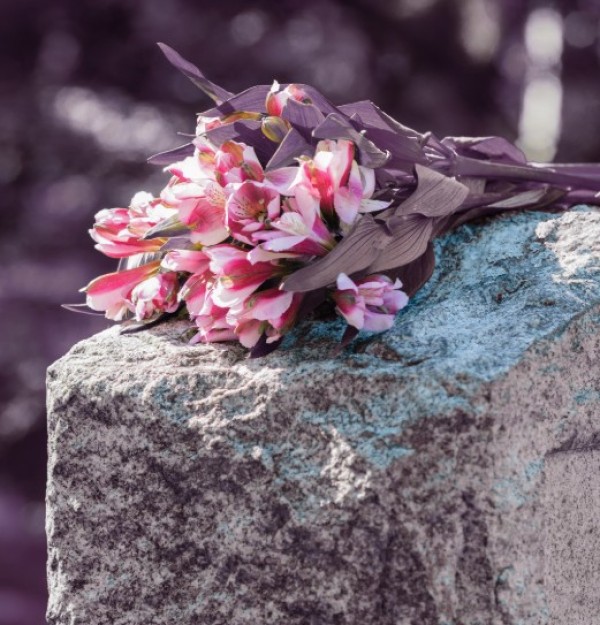
Burial involves buying a burial plot, paying an interment fee (which covers the cost of digging the grave and ongoing maintenance) and usually buying a memorial of some kind, such as a headstone. For many people, the “unveiling” of the headstone is an important part of their grieving.
In New Zealand, apart from a few exceptional circumstances which your funeral director can tell you about, the places a person can be buried are limited by law to official cemeteries or Màori burial grounds. It is usually possible to buy double-depth plots to allow for a second interment. (An opening fee will apply for the second interment.) Burial fees are set by local councils.
Many family members appreciate having a grave to visit which they can use as a focus to make a connection with the person who has died – thinking about them, crying, talking to them, or tending their grave.
Burial at sea
Burial at sea can take place only at specially designated locations off the New Zealand coastline. A special type of casket is required, and it is usually buried at sea from either a boat or a helicopter. Your Funeral Director can give you more information and make the arrangements for you.
Organ donation
Many New Zealander's have ticked "yes" to becoming a donor on their driver's licence. However, less than 1% of people who die can donate organs for transplantation.
Organ donation can only happen when a person is on a ventilator in an intensive care unit and has fatal brain damage.
Tissue donation - heart valves, eyes and skin - can occur in many more circumstances and can be facilitated a number of hours following death. Eye donation, in particular, can take place in a hospital, hospice or funeral home.
People of all ages will be considered for tissue donation and there are very few illnesses that would prevent donation.
Every year families in New Zealand generously agree to organ and tissue donation following the death of a loved family member saving or improving the lives of many grateful recipients. A health professional from Organ Donation NZ is available 24 hours a day to answer any questions about donation or to facilitate organ and tissue donation.
Donating a body for medical science
New Zealand medical schools do not have a constant requirement for donations. If you are interested in this option it is essential that arrangements are made prior to the death and that the medical school’s range of requirements and criteria have been met. As an alternative, you may want to be an organ donor. Your funeral director can give you information about both of these options.
Cremation
Cremation provides greater flexibility when choosing a final resting place, since you are not restricted to specific places of burial. Ashes can be buried in a cemetery or in special ashes memorial areas. Some families like to scatter them in a family plot or memorial garden, at sea, or in a favourite place. It is important in this case to be careful that the area you have chosen is not close to traditional Maori food-gathering grounds. Some people split the ashes and have a portion in one place and the rest somewhere else. Others keep ashes at home in special purpose urns.
The process of cremation is something people often wonder about. It comprises the casket, with the body inside, being placed in a cremator, which is like a very large metal box about the size of a small car. In some places it is possible for families to watch the casket being put into the cremator. The process of cremation takes place under very high temperatures, and generally takes between two and four hours. There is room for only one casket, and the ashes are taken from the cremator before it is used again, ensuring there is no chance of the ashes being mixed with others.
After cremation, the ashes are cremulated, or broken up. They are put into a simple container, usually made of plastic, which is about 30 centimetres long, and 15 centimetres deep.
If you choose cremation there are fees for that service and for interment in a cemetery, if that is what you choose. Some Funeral Directors have their own cremation facilities some are privately owned and many are run by councils.
Water cremation
Water cremation, also known as aquamation or alkaline hydrolysis, provides an alternative to traditional flame cremation and burial.
Instead of using fire, water cremation uses a combination of water, gentle heat, and natural alkaline compounds to accelerate the natural process of decomposition. The process takes place in a specialised stainless-steel vessel, leaving only the mineral content of the bones, which are then returned to the family in a form similar to cremated ashes.
Many people are attracted to water cremation because of its environmental benefits. It uses significantly less energy than flame cremation and does not release carbon dioxide, mercury, or other airborne emissions associated with the cremation process. For families seeking a more environmentally conscious option, water cremation offers a gentle and respectful alternative while maintaining the ability to keep, scatter, or inter ashes in the same way as traditional cremation.
Note: Water cremation is currently available in Christchurch, New Zealand, with availability in other regions expected to evolve as the service develops.