Handling family disagreements during funeral planning
There’s a question that families rarely ask me directly, but I can see it in their faces: “What if we can’t agree?” A common giveaway is that they don’t look at each other when we all meet up together, but I know that what’s often going on is that beneath their shared grief lie years of different relationships, conflicting memories, and unresolved tensions. It’s the elephant in the room at many funeral planning sessions.
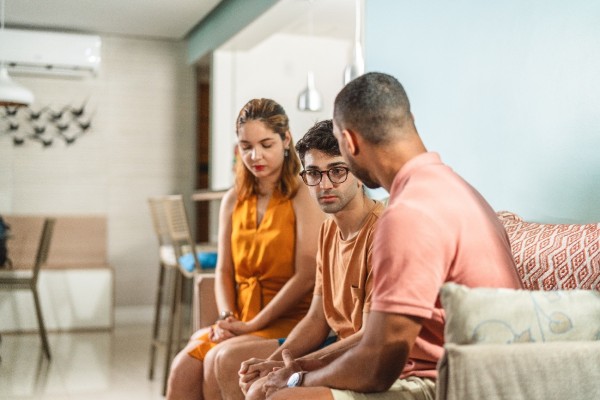
Family conflict during funeral planning is remarkably common. While the death of a loved one can result in family reconciliation, there are times when it doesn’t heal old wounds or reconcile different perspectives—it often intensifies them. When emotions are raw and decisions feel overwhelming, even families that are close can find themselves at odds.
Understanding this isn’t a failure of love, it’s what happens when people who’ve experienced the same person differently try to create a ceremony that feels authentic.
The challenge of competing truths
I sat with three siblings recently whose father had just died. The eldest remembered a devoted dad who attended every school event. The middle son recalled an emotionally distant workaholic who missed his rugby matches. The youngest spoke of the softened man who’d become present in his later years, ringing every Sunday and attending grandchildren’s birthdays.
None of them was wrong. They’d simply known different versions of the same person across different periods of his life, shaped by their ages and the particular moments when they’d needed him most. Luckily, they were able to recognise these differences and put them into words.
“How do we create a funeral that honours all of that?” the eldest asked. “My memories feel completely different from my brother’s.”
Making space for multiple stories
The most successful funerals I’ve helped plan embrace this rather than smoothing it over. The eldest daughter shared memories through photos of school events. The son chose music that he knew his Dad loved. The youngest spoke about the grandfather years and their evolving relationship. Together, these elements created a portrait that felt honest, showing the full humanity of the person they’d lost.
This requires letting go of the idea that there’s one ’correct‘ narrative.
Funerals can hold tension and still be deeply meaningful. Sometimes the most authentic tribute admits your loved one was different things to different people.
When disagreement is about logistics
Competing memories are one challenge, and disagreeing about practical arrangements is another. I’ve mediated discussions about burial versus cremation, religious services versus secular celebrations, and open caskets versus closed. The intensity often surprises families who expected to be unified in grief.
The underlying issue is rarely about the casket or venue. It’s about control during a very emotional time, about expressing love through choices, about feeling heard when you’re grieving.
In these situations, I ask them, “What would they have wanted?” and this can sometimes shift the conversation from competing preferences to shared purpose. Not always—sometimes the deceased never expressed clear wishes—but the question redirects focus from ’who gets their way‘ to ’what serves this farewell best.’
Giving everyone specific roles helps: one person chooses music, another selects flowers, and someone else curates photos. This transforms the process from competition into collaboration.
When distance complicates grief
Sometimes conflict stems from absence—relatives who haven’t spoken in years, the estranged parent who suddenly wants involvement, family members whose complicated relationship with the deceased doesn’t fit neatly into grief’s expected patterns.
Funerals don’t automatically heal estrangement, and expecting reconciliation during acute grief creates unrealistic pressure. The goal isn’t to force closeness where it doesn’t exist, but to create space where people can acknowledge loss whilst maintaining necessary boundaries.
I worked with a woman whose mother had died after years of minimal contact. The extended family expected her to lead arrangements, but she felt confused about her role. “I don’t know how to publicly grieve someone I’d already lost years ago,” she told me. We created a solution where other relatives handled most of the planning whilst she contributed in smaller ways—choosing a poem, making a financial contribution. It honoured both her connection to her mother and the reality of their estrangement.
Finding workable peace
Family tensions during funeral planning don’t always resolve neatly. Sometimes people remain frustrated. That’s the reality of grief intersecting with complex family dynamics.
What matters most is creating a farewell that honours the person who died whilst acknowledging the different relationships that surrounded them. This doesn’t require perfect agreement or forced unity. It requires enough grace to recognise that everyone’s processing loss differently, enough flexibility to include multiple perspectives, and enough focus on shared love to navigate the disagreements.
I see my role as a facilitator. I’m providing structure, offering options, and helping families find ways forward that feel authentic. Sometimes that means suggesting compromises. Sometimes it means helping people understand why others feel strongly about particular choices. Often it simply means being a calm presence whilst families work through difficult conversations.
The funeral you create won’t be perfect, and it won’t please everyone equally. But if it reflects genuine care for the person who died and respect for those grieving them—even when that grief looks different across family members—you’ve honoured both the complexity of your loved one’s life and the reality of your family’s response to losing them.
Sam - representing the Funeral Directors Association of New Zealand (FDANZ).